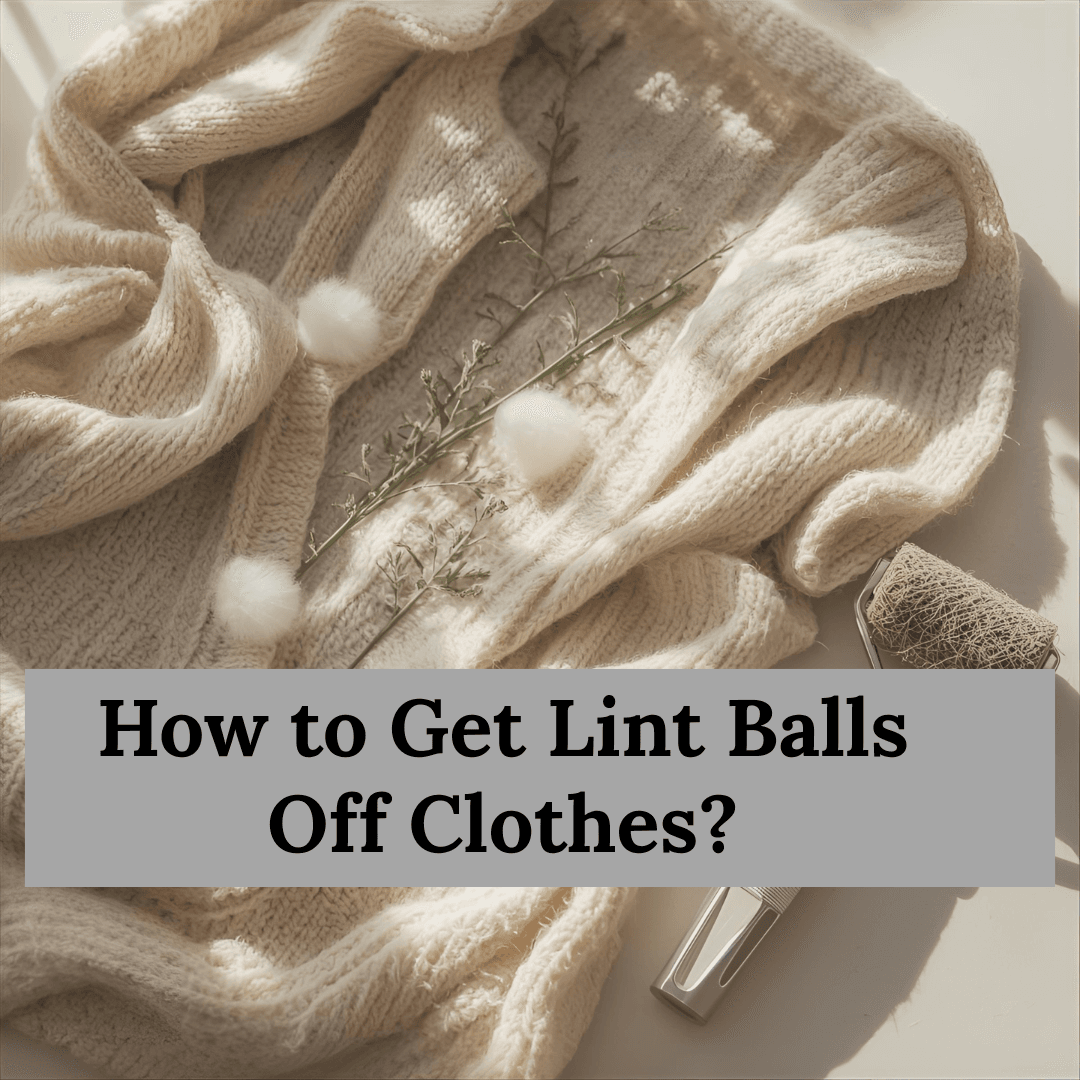
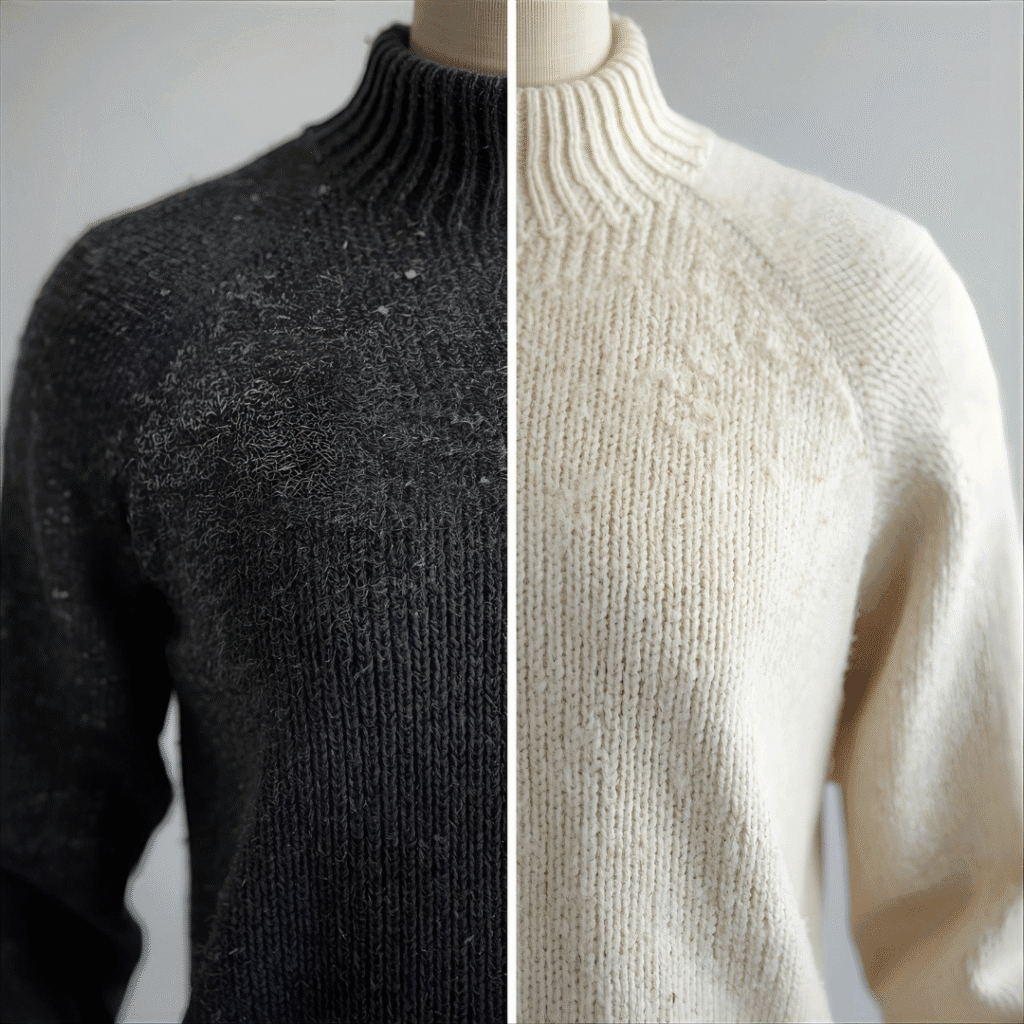
Hey ladies! Have you ever pulled out your favorite sweater only to find it covered in those annoying little fuzz balls? Trust me, I’ve been there. Nothing ruins a cute outfit faster than fabric pilling.
But here’s the good news. You don’t need to throw away those clothes. I’m going to share all my tried and tested methods to remove lint balls and keep your wardrobe looking fresh.
Table of Contents
Why Removing Lint Balls Is Important
Those pesky lint balls make even your newest clothes look old and worn. They can totally ruin the look of a cute outfit you’ve been planning to wear.
Plus, if you don’t remove them early, they just get worse over time. The fuzz balls multiply and become harder to get rid of. Taking care of pilling right away helps your clothes last longer and look better.
What Are Lint Balls and Why Do They Form?
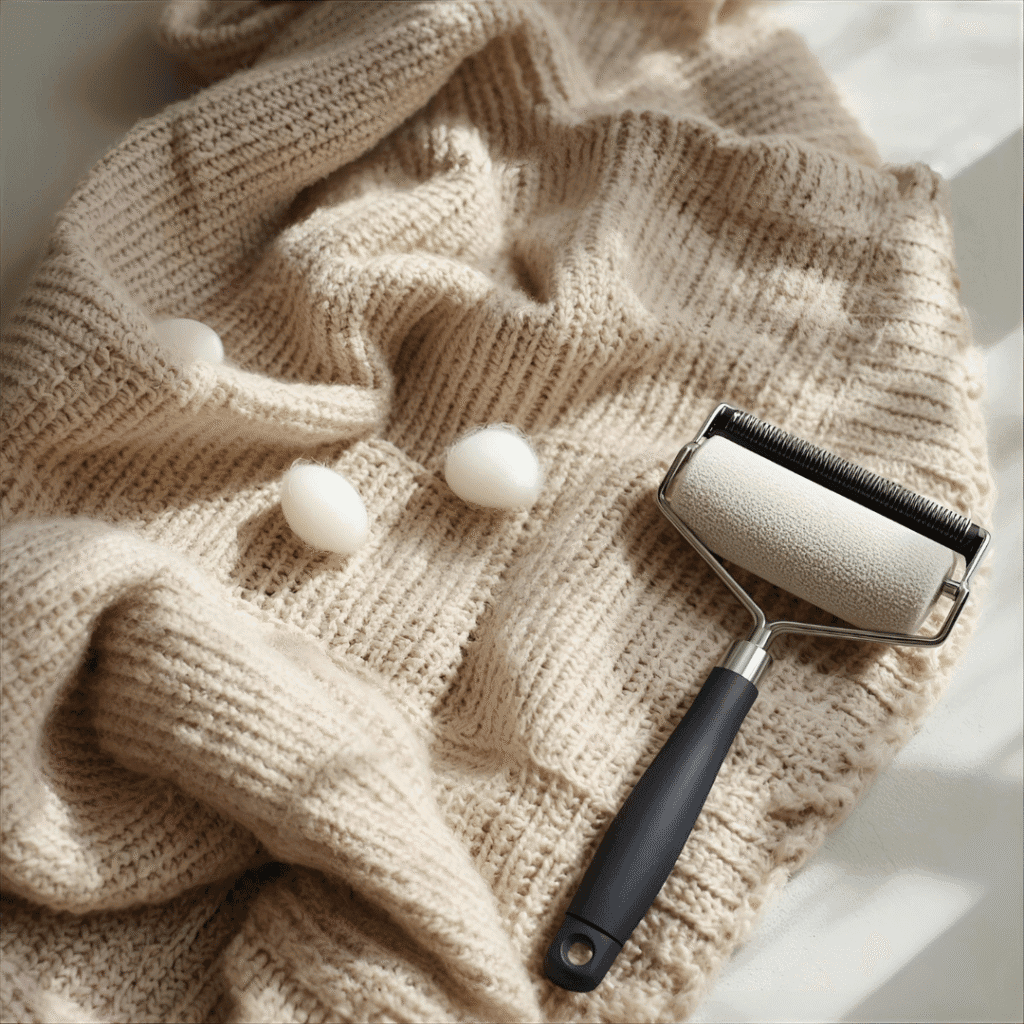
Lint balls are also called pills or fuzz balls. They’re those tiny balls of fiber that form on your clothes and make them look fuzzy and old.
These annoying little things happen when loose fibers from your fabric get tangled together. The rubbing and friction during regular wear creates them. Even washing and drying your clothes can cause pilling.
Types of Fabrics Prone to Lint Balls
Some fabrics pill more than others. Here are the main culprits:
Natural fibers: Wool, cotton, and cashmere sweaters are super prone to pilling. The soft fibers break easily and tangle together.
Synthetic fabrics: Polyester, acrylic, and nylon blends also pill a lot. These man-made materials create stubborn fuzz balls.
Knitted fabrics: Anything with a loose weave like sweaters and leggings. The looser the knit, the more it pills.
Blended fabrics: Mix of natural and synthetic fibers. These can be the worst because different fibers react differently to friction.
Areas that see the most rubbing pill first. Think underarms, inner thighs, and where your bag strap sits. These spots get constant friction throughout the day.
Tools and Products to Remove Lint Balls
Let me share the best tools I use to fight fabric pilling. Some are cheap and easy, others are worth the investment.
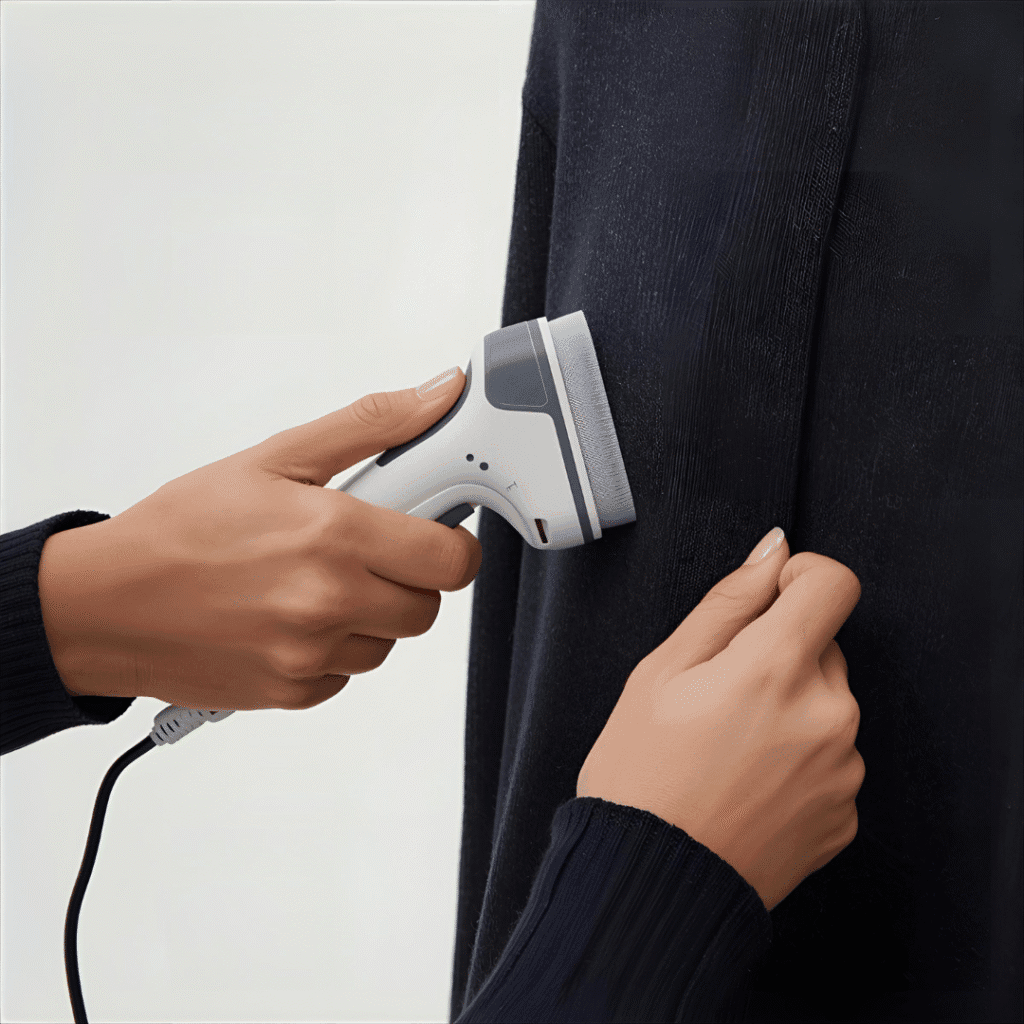
Fabric Shavers and Electric Lint Removers
This is my absolute favorite method. A fabric shaver is like a tiny electric razor for your clothes.
Here’s how to use one safely:
- Lay your garment flat on a table or hard surface
- Pull the fabric tight with one hand
- Turn on the shaver and move it gently in circles
- Use light pressure – don’t push too hard
- Empty the lint container when it gets full
Electric fabric shavers work super fast. They literally shave off those fuzz balls in seconds. I use mine on everything from sweaters to couch cushions.
The best part? Most fabric shavers are battery-powered and cost under twenty dollars. They’re a total game changer for keeping your wardrobe fresh.
Lint Rollers and Adhesive Tape Methods
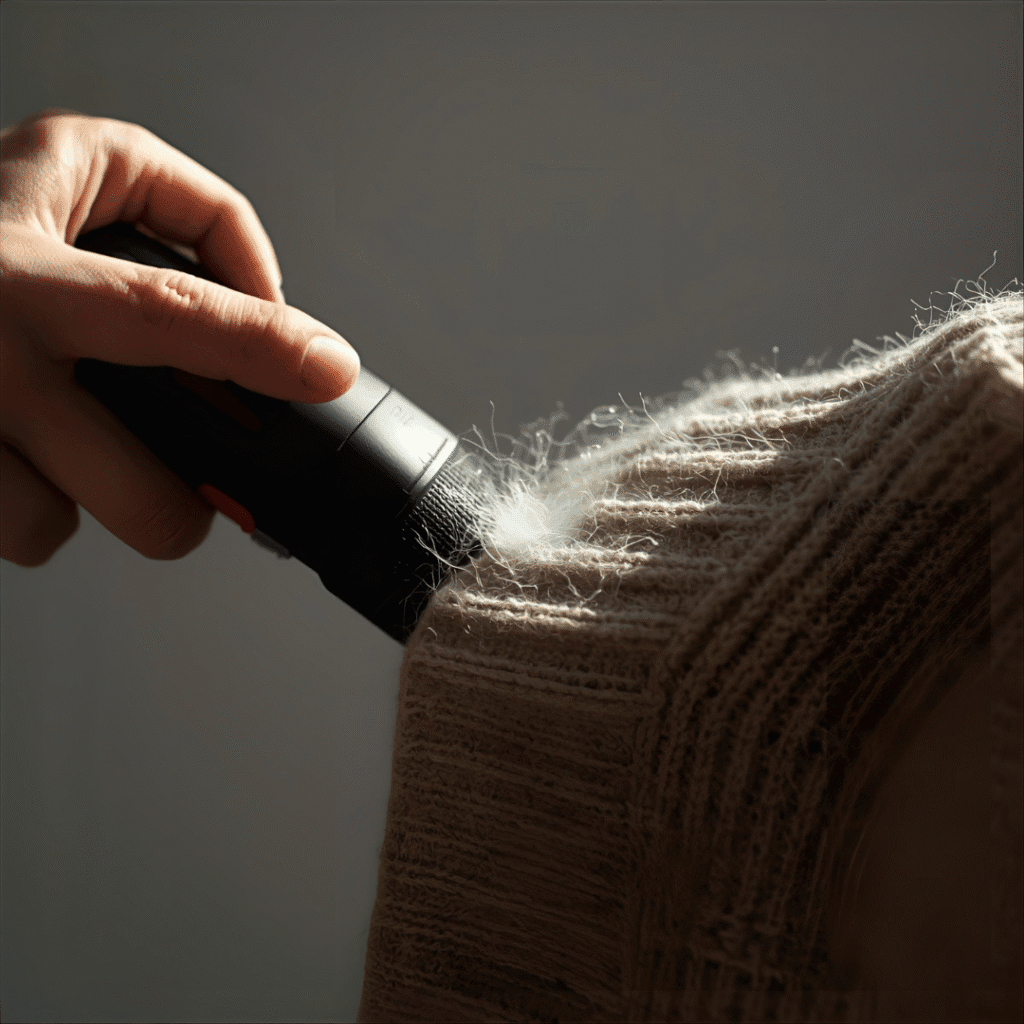
Lint rollers are perfect for quick fixes. They work great on loose surface fuzz that hasn’t formed tight balls yet.
Just roll the sticky part over your clothes. The adhesive picks up lint, hair, and loose fibers instantly.
Don’t have a lint roller? Regular packing tape or masking tape works too. Wrap it around your hand with the sticky side out. Pat it on the fabric and lift away the fuzz.
This method is super handy when you’re in a rush. I always keep a lint roller in my car for last-minute touch-ups before meetings or dates.
Scissors and Razor Blade Techniques
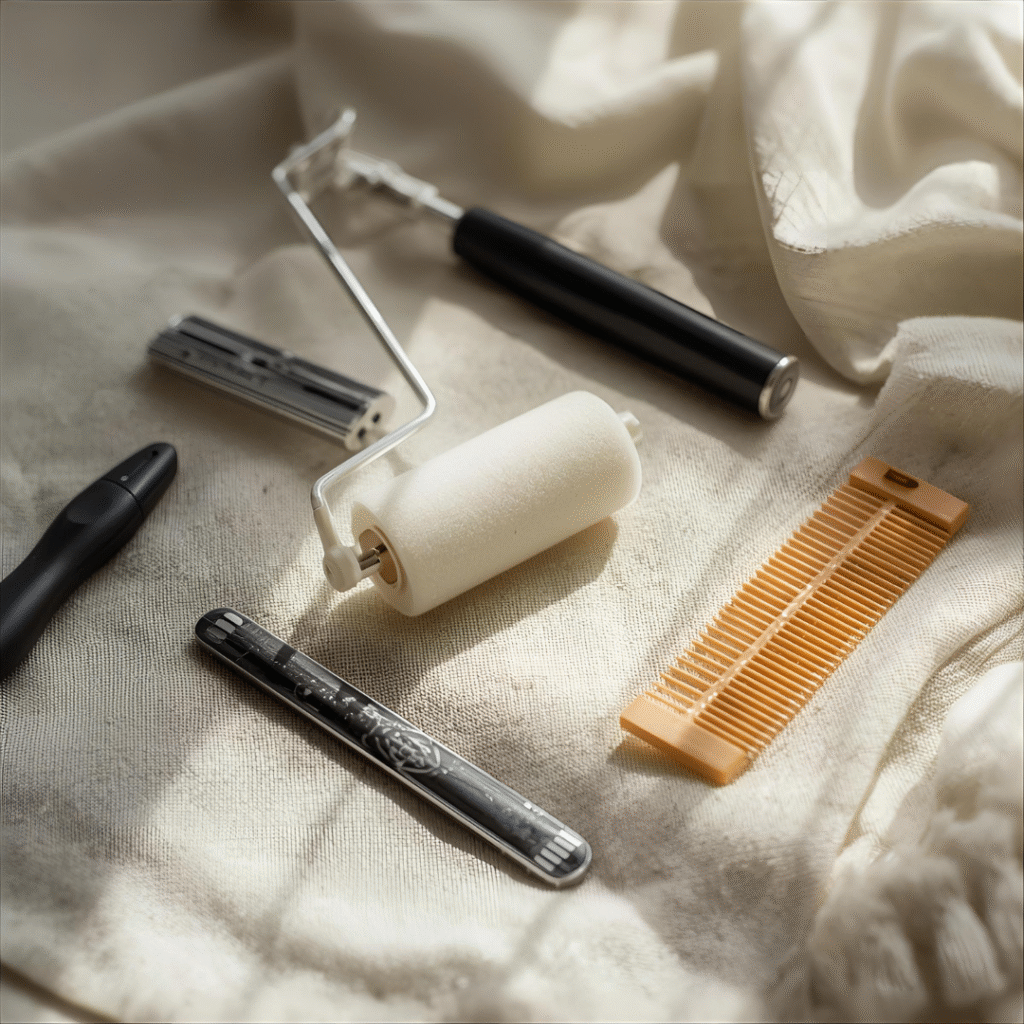
A disposable razor can save your clothes in a pinch. This is my second favorite method because it’s cheap and you probably already have one.
Here’s how to do it safely:
- Place your garment on a flat surface
- Stretch the fabric tight
- Use a fresh, single-blade razor
- Shave in short, gentle strokes
- Don’t press too hard or you’ll cut the fabric
- Clean off the pills with a lint roller when done
Be careful with this method. Go slow and use light pressure. I’ve seen people accidentally cut holes in their clothes by being too aggressive.
Small scissors also work for really stubborn pills. Just snip them off carefully one by one. This takes longer but gives you more control.
Specialty Combs and Brushes
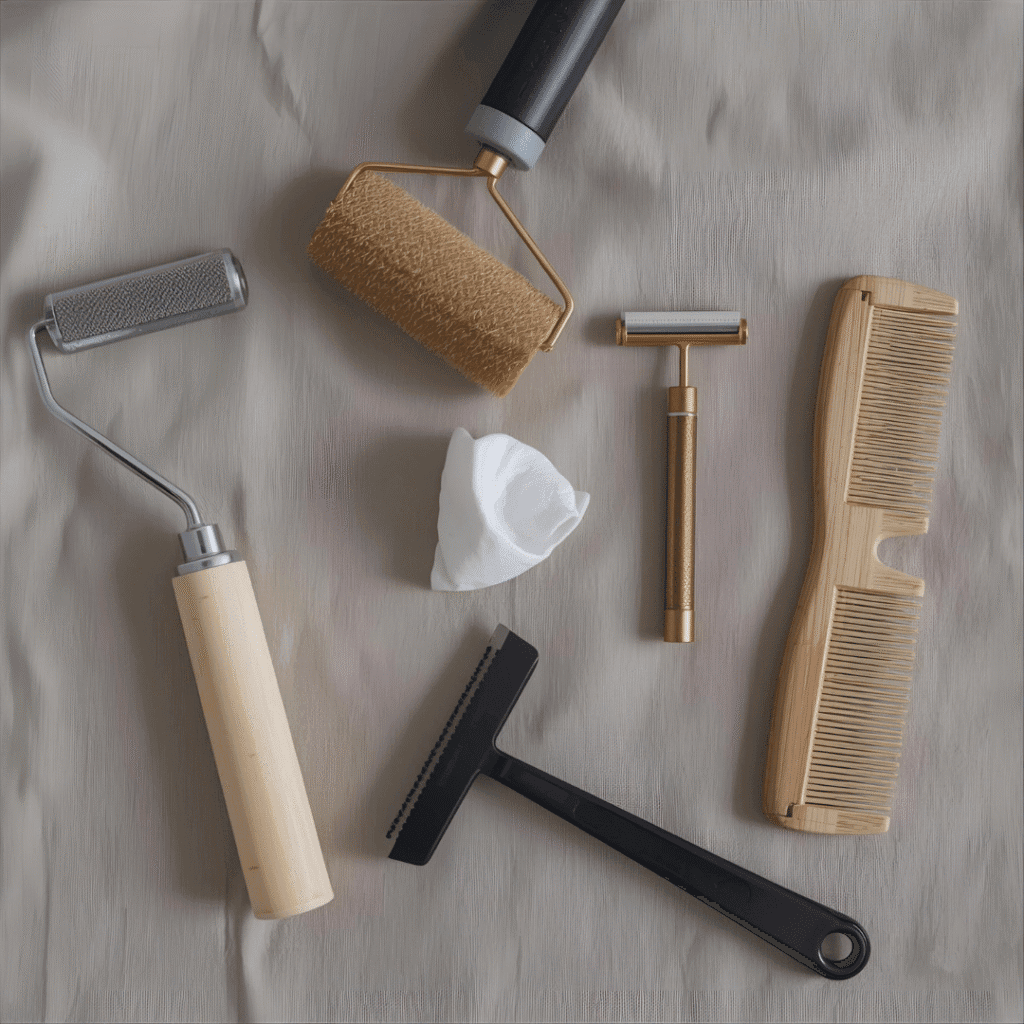
Sweater combs are designed specifically for removing pills from knitwear. They look like small pet brushes with metal or plastic teeth.
To use a fabric comb:
- Lay your sweater flat
- Hold the fabric taut
- Brush the comb across the surface at a slight angle
- The teeth catch and lift away the fuzz balls
- Clean the comb teeth as you go
Sweater stones or pumice stones also work. These are rough stones you rub across the fabric. The texture catches pills and pulls them away.
I find these tools work best on thicker fabrics like wool coats and chunky sweaters. They’re less effective on delicate materials.
DIY and Household Remedies to Remove Lint Balls
Don’t want to buy special tools? No problem. Your house is full of things that can remove lint balls.
Velcro strips: Press the scratchy side against your clothes. The hooks grab fuzz balls and pull them off. This actually works really well.
Rubber gloves: Put on a clean rubber glove and rub it across your clothes. The friction pulls up pills. I discovered this by accident while cleaning.
Nylon stockings: Ball up an old pair of pantyhose and rub it on the fabric. Static electricity helps lift away lint.
Dry dryer sheets: Slightly dampen a dryer sheet and wipe it across your clothes. This removes light fuzz and makes things smell fresh.
Scouring pads: The green scratchy side of a kitchen sponge can remove pills. Dampen it first so it’s not too rough.
Dryer balls: If you have wool dryer balls, rub them across dry clothes to pick up fuzz. They work surprisingly well.
These DIY methods are great when you’re traveling or don’t have your regular tools handy.
Preventing Lint Balls on Clothes
Prevention is way easier than removal. Here’s how to stop pilling before it starts.
Proper Washing Techniques
How you wash your clothes makes a huge difference. Follow these tips to minimize fabric pilling:
Turn clothes inside out: This is the single best thing you can do. It protects the outside surface from friction.
Use cold water: Hot water weakens fibers and makes them more likely to break and pill.
Choose gentle cycles: Slow spin speeds mean less agitation and rubbing.
Don’t overload the washer: Clothes need room to move freely. Too many items crammed together creates excessive friction.
Separate by fabric type: Don’t wash your delicate sweaters with heavy jeans. Keep similar fabrics together.
Sort by color: If pills do form from different fabrics rubbing together, they won’t be as noticeable.
Zip up zippers and button buttons: These hard closures can damage and pill other fabrics in the wash.
Use enzyme detergent: Special laundry detergents with enzymes help smooth fabric fibers and prevent pilling.
Add fabric softener: This keeps fibers soft and reduces friction. But don’t overdo it.
Hand wash delicate items: Sweaters and cashmere last longer when washed by hand in cold water.
Drying and Storing Tips
How you dry and store clothes matters just as much as washing.
Air dry when possible: Skip the dryer for sweaters and delicate items. The tumbling creates friction that causes pills.
Use low heat: If you must use the dryer, choose the lowest heat setting.
Remove clothes promptly: Don’t let them sit in the dryer tumbling after they’re dry.
Fold sweaters flat: Never hang knits. The weight stretches them out and causes more wear.
Store properly: Keep clothes in breathable containers. Don’t stuff them in drawers where they’ll rub against each other.
Avoid friction: Be mindful of what you wear under jackets and coats. Reduce layers that rub together.
Watch your bags: Purse straps and backpacks create friction points. Switch up where you wear them.
When to Replace Your Clothes Instead of Removing Lint
Sometimes clothes are just too far gone. Here’s when to call it quits.
If the fabric is thin and worn with holes starting to form, it’s time to let go. No amount of pill removal will fix damaged fabric.
When the garment has more pills than smooth surface, you’re fighting a losing battle. This usually means the fibers are completely broken down.
If you’ve removed pills multiple times and they keep coming back immediately, the fabric quality is too poor to save.
Also, if removing pills makes the fabric look worse or creates bare spots, stop. You’re doing more harm than good.
Be honest about the condition of your clothes. Sometimes it’s better to donate worn items and invest in better quality pieces that will last longer.
FAQs About Removing Lint Balls Off Clothes
Are lint balls harmful to fabric?
Lint balls themselves don’t harm fabric. They’re just loose fibers that have tangled together on the surface. However, the friction that causes pilling can weaken fabric over time. Removing pills carefully won’t damage your clothes if you use the right tools and techniques.
Can all fabrics be de-pilled safely?
Most fabrics can be de-pilled, but you need to be extra careful with delicate materials. Cashmere and silk need gentle methods like a soft sweater comb. Thicker fabrics like fleece and wool can handle electric shavers. Always test on a small hidden area first before treating the whole garment.
How often should I remove lint balls?
Remove lint balls as soon as you notice them forming. Catching pilling early stops it from getting worse. For clothes you wear often, check them every few weeks. Taking care of pills right away means less work in the long run and helps your clothes last longer.
Does pilling mean my clothes are poor quality?
Not always. Even high quality fabrics like cashmere and merino wool can pill. It’s often just a natural result of wear and friction. That said, very cheap fabrics with loose weaves do pill more easily. Focus on proper care rather than assuming pilling means bad quality.
Can dry cleaning remove lint balls?
Dry cleaning doesn’t typically remove established pills. The cleaning process isn’t designed to cut away those fiber balls. Some dry cleaners offer de-pilling as an extra service, but you’ll need to ask specifically. It’s usually easier and cheaper to remove pills at home.
What’s the fastest way to remove lint balls?
An electric fabric shaver is definitely the fastest method. You can de-pill an entire sweater in just a few minutes. Lint rollers work quickly for loose surface fuzz. If you’re in a rush and don’t have tools, the disposable razor method works pretty fast too.
Will washing remove lint balls?
Regular washing won’t remove existing lint balls. In fact, washing can make pilling worse by creating more friction. The pills are attached to the fabric and need to be physically cut or scraped away. Focus on preventing new pills during washing rather than expecting the wash to remove them.
Can I prevent pilling completely?
Unfortunately, you can’t prevent pilling entirely. Some amount of fabric wear is inevitable with regular use. But you can dramatically reduce it by washing clothes inside out, using gentle cycles, air drying, and being mindful of friction from bags and belts. Good care makes a huge difference.
Is it better to pick pills off by hand?
Don’t pull pills off by hand. This can actually damage the fabric and create more pilling. When you tug at pills, you pull out additional fibers and weaken the material. Always use proper tools like fabric shavers, combs, or razors to safely cut away pills without harming the garment.
Conclusion: Keep Your Clothes Looking Fresh and New
Dealing with lint balls doesn’t have to be a nightmare. With the right tools and techniques, you can easily remove fabric pilling and keep your favorite clothes looking amazing.
My top recommendation is investing in an electric fabric shaver. It’s fast, effective, and works on almost everything. Keep a lint roller handy for quick touch-ups.
But remember, prevention is key. Wash your clothes inside out, use cold water and gentle cycles, and air dry when you can. These simple habits will dramatically reduce pilling.
Take good care of your wardrobe and it’ll last so much longer. You don’t need to constantly buy new clothes when you can restore the ones you already love.
Now go check your closet and give those fuzzy sweaters some love. Your clothes will thank you, and you’ll feel confident wearing them again. Happy de-pilling, ladies!