
Table of Contents
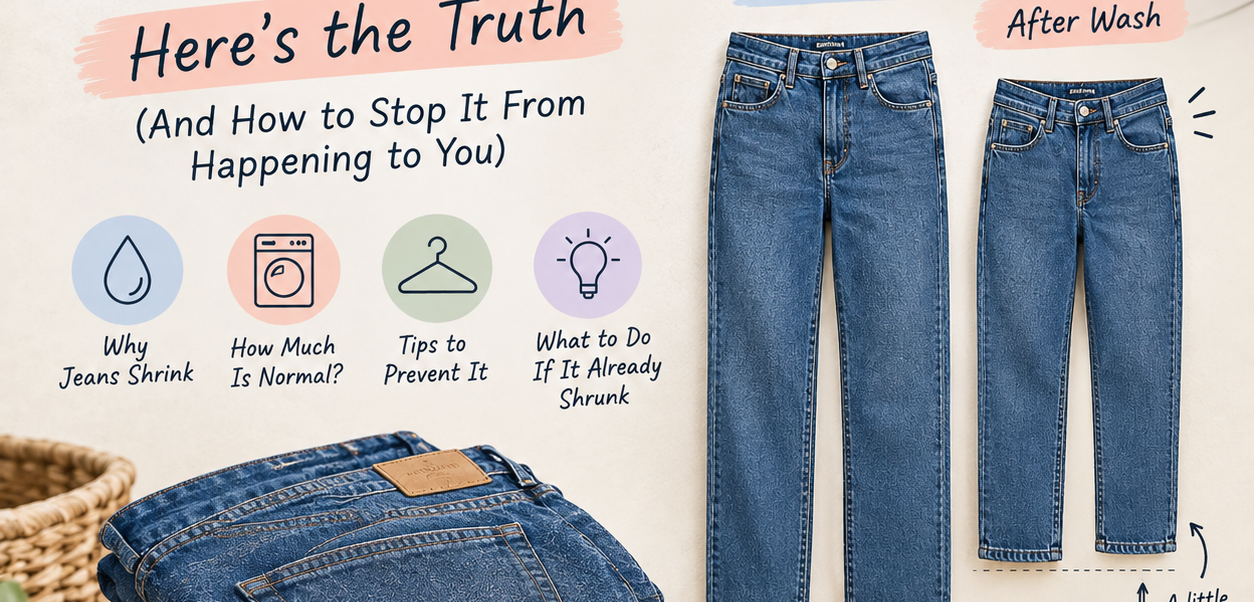
Hey style lovers! Have you ever pulled a favorite pair of jeans out of the dryer, tried to button them, and genuinely wondered if they’d been swapped for a smaller size overnight? Same. Do jeans shrink? Yes, they absolutely can, and I learned that lesson the hard way with a pair of straight-leg jeans I loved so much I nearly cried when they came out of the dryer two sizes tighter.
Here’s what I promise you by the end of this one: you’ll know exactly why jeans shrink, how much shrinkage is actually normal, and the laundry habits that’ll keep your favorite denim fitting the way it did on day one. I’ll also cover what to do if the damage is already done, because trust me, there’s usually a fix.
Denim is honestly one of the trickiest fabrics to predict, since so much depends on the cotton blend, the weight, and how it was treated before it ever reached your closet. So let’s break down the actual science behind it, minus the confusing textile jargon.
Do Jeans Shrink? The Short Answer
Yes, and it’s completely normal. Nearly all cotton fabric shrinks at least a little when it’s exposed to heat and moisture, and jeans are no exception. The real question isn’t whether your jeans will shrink, it’s how much, and that depends heavily on the type of denim you’re wearing.
Most modern, mass-market jeans are treated to resist major shrinkage before they ever hit the shelf. That means the shrinkage you’ll typically see is small, usually somewhere between 1 and 5 percent. On a pair of jeans with a 32-inch inseam, that translates to roughly half an inch to just over an inch of length disappearing, which is honestly enough to turn a full-length hem into an ankle-grazer. Fabric weight plays a role too, and it’s the same GSM logic that affects how any woven fabric drapes and holds its shape.
The bigger, more dramatic shrinkage stories you’ve probably heard, jeans going down a full size or more, almost always involve raw or untreated denim. I’ll get into exactly what that means in a second, because it changes everything about how you should wash your jeans.
Why Jeans Shrink in the First Place
Here’s the part I actually find kind of fascinating. When denim is woven, the yarns are stretched tight under tension during production. That tension stays locked into the fabric until something releases it, and that something is usually hot water.
Once your jeans hit the wash, the heat and moisture relax those stretched-out fibers, and the fabric contracts back toward its natural, unstretched size. Your dryer then finishes the job, since high heat causes even more of that contraction. This is why the very first wash typically does the most damage. It’s called relaxation shrinkage, and it’s the biggest single shrink event your jeans will ever go through.
After that first wash, you’ll usually see a little more shrinkage over the next few cycles, known as progressive shrinkage, but it tapers off fast. Most jeans are essentially done shrinking after about five washes. So if your jeans have survived a handful of wash cycles without changing size, you can breathe easy. The scary part is behind you.
Raw Denim vs Sanforized (Pre-Shrunk) Denim: What’s the Difference
This is honestly the single biggest factor in how much your jeans will shrink, and most people have never heard the terms.
Sanforized denim has been through a mechanical pre-shrinking process during manufacturing. The fabric gets compressed before it’s ever cut and sewn, so most of that built-in tension has already been released. This is what the vast majority of jeans from brands like Old Navy, Gap, and Uniqlo use, and it’s why your average pair of jeans only shrinks a small, predictable amount.
Raw denim skips that step entirely. It’s the deep, stiff, dark denim you’ll see labeled “raw” or “shrink-to-fit,” often at specialty or premium denim brands. This type of denim can shrink up to 10 percent after its very first wash, which is a genuinely dramatic size change. If you’ve ever bought raw denim, you’ve probably seen instructions telling you to size up on purpose to account for exactly this.
My honest advice: always check the label before you wash a new pair of jeans for the first time. If it says anything like “wash before wearing” or doesn’t mention pre-shrinking at all, treat that first wash carefully and expect some size change. Cotton twill bottoms like the ones I compared in my chinos vs khakis breakdown go through similar pre-treatment decisions, so the same read-the-label habit is worth carrying over to your whole closet, not just denim.
How Much Do Jeans Actually Shrink?
Let’s put some real numbers next to this, because vague answers never help anyone shop or do laundry with confidence.
| Denim type | Typical shrinkage | What that means on a 32″ inseam |
| Sanforized (pre-shrunk) | 1%–3% | About 1/4″–1″ shorter |
| Standard cotton denim, untreated | 2%–5% | About 1/2″–1.5″ shorter |
| Raw or unsanforized denim | Up to 10% | Up to 3″ shorter |
| Stretch denim with elastane | 1%–3%, plus some loss of stretch recovery | About 1/4″–1″ shorter |
Width tends to shrink less dramatically than length in most cases, since there’s usually less tension applied in that direction during weaving. That’s exactly why your jeans often feel tighter through the waist and hips right after a wash, but that snugness tends to ease up again once you’ve worn them a bit and the fabric relaxes with your movement.
Stretch Jeans vs 100% Cotton: Do They Shrink the Same Way?
Not quite, and this trips a lot of people up. Stretch denim contains a small percentage of elastane, spandex, or Lycra blended into the cotton, usually somewhere between 1 and 5 percent. That stretch fiber behaves differently under heat than pure cotton does.
The cotton portion of a stretch jean will still shrink in roughly the same way regular denim does. But repeated exposure to high heat can also break down the elastane over time, which means your jeans might not actually get smaller so much as lose their stretch and recovery. That’s the “my jeans used to bounce back and now they just sag” problem, and it’s a completely different issue from true shrinkage, even though it feels similar day to day.
If you love the fit of your bottom wear staples with a little give in them, this is exactly why washing on cold and skipping the dryer matters even more for stretch denim than it does for rigid, 100% cotton jeans.
How to Wash Jeans Without Shrinking Them
This is the part you actually came here for, so let’s get practical.
Wash in cold water, always. Heat is the single biggest driver of shrinkage, and cold water dramatically slows down that fiber relaxation process. This one change alone prevents most of the shrinkage people deal with.
Skip the dryer, or use the lowest heat setting available. Air drying is genuinely the gold standard for denim. Lay your jeans flat or hang them, and let them dry naturally. If you need the dryer for time reasons, use a low or no-heat setting and pull them out slightly damp.
Turn them inside out before washing. This protects the color and reduces the fading that happens alongside shrinkage, especially on dark or black denim.
Wash less often than you think you need to. Denim doesn’t need to be washed after every single wear the way a cotton tee does. Spot cleaning and airing jeans out between wears cuts down on how many shrink cycles they go through over their lifetime.
Avoid overloading the washing machine. A packed machine means more friction and agitation on the fabric, which speeds up both shrinkage and general wear.
How to Unshrink Jeans That Went Too Far
If the damage is already done, don’t panic and don’t toss them yet. There’s a genuinely effective at-home fix for mild to moderate shrinkage.
Fill a basin with lukewarm water and mix in a couple tablespoons of hair conditioner or baby shampoo. Submerge your jeans completely and let them soak for about 20 to 30 minutes. The conditioner helps relax the cotton fibers back open.
While the jeans are still damp, gently pull and stretch the fabric in the areas that need more room, focusing on the waist, hips, and length. Avoid pulling directly on seams, since that can tear the stitching instead of stretching the fabric.
Lay the jeans flat or hang them to air dry, continuing to tug gently every so often as they dry. Skip the dryer entirely during this process, or you’ll undo all your work in about ten minutes.
This method works best on jeans that shrunk a little too much, not ones that went through a full raw-denim-style 10 percent shrink. For that level of damage, honestly, you’re often better off treating it as a lesson for next time and shopping for a properly fitted replacement.
Styling Around Shrinkage: What To Do If Your Jeans Come Out Different
Sometimes a slightly shrunk pair of jeans isn’t actually a disaster, it’s just a style shift waiting to happen. If your straight-leg jeans came out of the wash sitting a bit higher on the ankle, don’t force them back to their old length. Lean into it and wear them as a cropped style instead, paired with ankle boots or flats.
I did this last year with a pair that shrunk about an inch after I accidentally tossed them in a hot wash with towels. Instead of fighting it, I started wearing them with loafers and a slightly longer top, and honestly, the proportions read intentional. Nobody knew it was a laundry mistake and not a deliberate choice.
If the waist tightened up more than the length did, that’s usually the temporary relaxation shrinkage talking, and it tends to loosen back up within a wear or two. This is actually similar logic to the inseam and rise conversation I got into in my inseam vs outseam guide, since a shrunk waistband effectively shifts your whole rise measurement without you touching the hem at all.
Common Mistakes That Cause Jeans to Shrink
I’ve made most of these myself, so let this section save you a few ruined pairs.
Washing new jeans in hot water before checking the care label is probably the most common one. That first wash matters more than any other, so it’s worth the extra thirty seconds to check.
Tossing jeans in with a hot load of towels or sheets is a sneaky one, since you might be washing your jeans “correctly” on their own setting but accidentally running the whole load on high heat anyway.
Ignoring pilling and fabric wear is another habit worth breaking, since a well-maintained pair of jeans holds its shape better over time. If you’re already dealing with fabric pilling on other pieces in your closet, the same gentle-wash habits that prevent shrinkage will help there too.
Assuming all denim behaves the same way is probably the biggest overall mistake. A raw denim pair and a stretch-blend pair from the same types of clothing category can shrink at completely different rates, so treat each pair based on its actual fabric content, not just the fact that it’s called “jeans.”
FAQs
1. Do jeans shrink in cold water?
A little, but far less than in hot water. Cold water is the single best way to minimize shrinkage while still getting your jeans clean.
2. Do 100% cotton jeans shrink more than blends?
Generally yes. Pure cotton has no synthetic fiber to help hold its shape, so it tends to shrink slightly more than a cotton-elastane blend, though the difference is usually modest if both are sanforized.
3. How much do jeans shrink in the dryer?
It depends on the heat setting, but expect anywhere from 1 to 5 percent shrinkage on a standard pair, with raw or untreated denim shrinking significantly more, sometimes up to 10 percent.
4. Will jeans shrink back to normal after they stretch out?
Not exactly. Stretching from wear is a different process than shrinking from heat, so a stretched-out pair won’t just wash itself back to its original size unless you wash it in hot water, which brings its own shrinkage risk.
5. Can I shrink jeans on purpose to get a tighter fit?
Yes, this is actually a common trick. Washing jeans in hot water and drying them on high heat intentionally can tighten a pair that’s fitting a bit loose, though it’s smart to check them frequently during the process so you don’t overshoot.
6. Do jeans shrink more in length or width?
Length, typically. There’s usually more tension applied lengthwise during weaving, which means that direction has more built-up shrink potential once heat and water release it.
7. Is it normal for new jeans to feel tighter after the first wash?
Yes, this is extremely common and usually temporary. That initial post-wash snugness often eases up within a wear or two as the fabric relaxes again with your movement.
The Bottom Line
So here’s the short version, ladies: do jeans shrink? Almost always a little, and sometimes a lot, depending on whether your denim is sanforized or raw. Cold water and air-drying are your two best defenses, and a little hair conditioner can undo most minor shrinking disasters if you act before you write the jeans off completely.
My honest advice is to treat that very first wash like it matters, because it genuinely does the most damage of any wash your jeans will ever go through. Check the label, go easy on the heat, and your favorite pair has a much better shot at fitting the same way in a year as it does today.
A pair of jeans that keeps its shape is honestly one of the best investments in a capsule wardrobe, since it’s the one piece most of us reach for on repeat.
Has a pair of jeans ever betrayed you in the dryer? Tell me your worst shrinkage story in the comments, I promise mine was worse.