Table of Contents
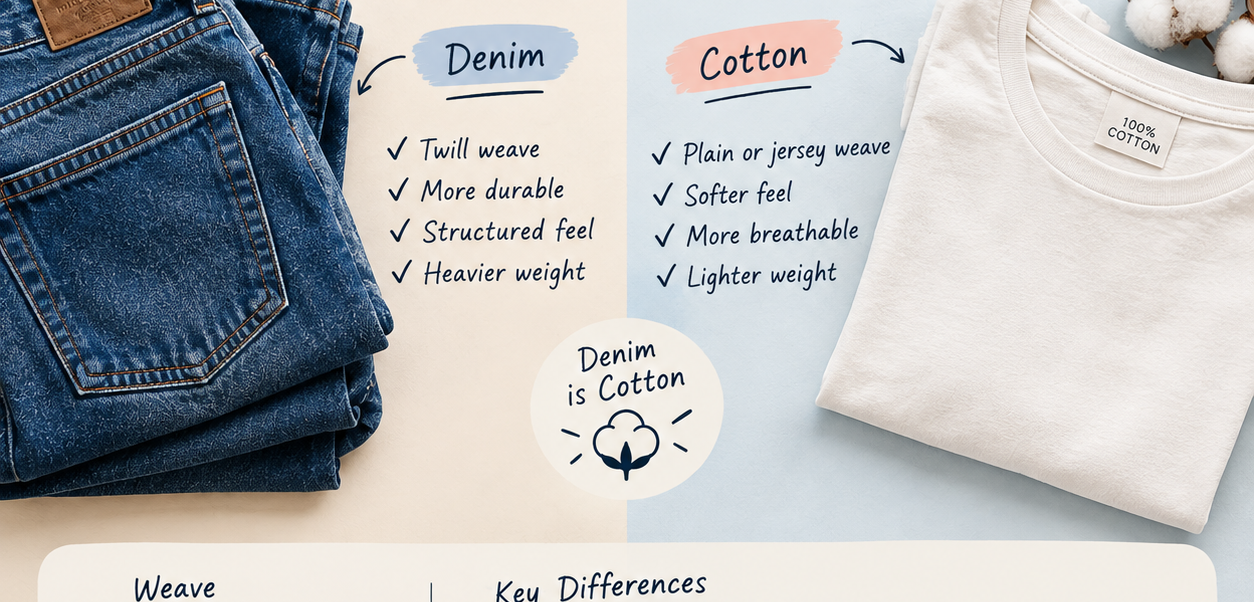
Hey lovely ladies! Can we talk about one of the most confusing labels on every clothing tag? So many of you have asked me some version of “denim vs cotton, which one should I buy,” and here’s the twist that surprises almost everyone: denim isn’t a separate material competing with cotton at all. Denim is cotton.
I know, I know. It sounds like a trick question. I used to assume denim was its own special fabric too, until I actually looked into how it’s made and realized I’d been comparing apples to a specific kind of apple pie this whole time.
By the end of this guide, you’ll know exactly what separates a pair of jeans from a plain cotton tee, why they feel and behave so differently even though they share the same raw material, and which one actually makes sense for whatever you’re shopping for. Let’s clear up the denim vs cotton confusion once and for all.
Wait, Isn’t Denim Made of Cotton?
Yes, in almost every case, it is. Cotton is a natural fiber that comes from the cotton plant, and it’s the raw material used to make an enormous range of fabrics, everything from a soft jersey tee to a crisp poplin blouse to your favorite jeans.
Denim is one specific way of weaving that cotton fiber into fabric. It uses something called a twill weave, where the crosswise threads pass under two or more lengthwise threads instead of alternating one over, one under like a plain weave does. That construction is exactly what gives denim its signature diagonal ribbing and its sturdier, stiffer hand feel.
So when people ask me denim vs cotton like it’s a fair fight between two unrelated materials, the more accurate comparison is really denim versus other cotton fabrics, like the lightweight cotton used in a basic tee or the mid-weight cotton twill you’ll find in a pair of chinos.
Denim vs Cotton: The Key Differences
Let’s put the practical differences side by side, since this is really what most of you are trying to figure out before you buy something.
| Denim | Plain Cotton Fabric | |
| What it is | A twill-woven cotton fabric | A fiber, woven into many fabric types |
| Weave | Diagonal twill weave | Usually plain or jersey weave |
| Typical weight | 6 to 16+ ounces per yard | Often lighter, 3 to 8 ounces per yard |
| Feel | Structured, stiff at first, softens with wear | Soft and flexible from the start |
| Durability | Very high, resists tearing | Moderate, wears out faster with friction |
| Breathability | Lower, especially in heavier weights | Higher, especially in lighter weaves |
| Common uses | Jeans, jackets, structured bottoms | T-shirts, blouses, dresses, everyday basics |
The honest bottom line here is that denim wins on structure and durability, while lighter cotton wins on softness and breathability. Neither one is objectively better, they’re just built for different jobs in your closet.
How the Weave Changes Everything
This is the part that genuinely surprised me the most when I started paying attention. Two garments can be made from the exact same cotton fiber and still feel like completely different materials, purely because of how that fiber gets woven together.
A plain weave, the kind used in most basic cotton tees and button-downs, alternates threads in a simple over-under pattern. It’s quick to produce and creates a smooth, even surface that moves easily and breathes well.
Denim’s twill weave stacks threads differently, creating that diagonal rib you can actually see and feel on the surface. This structure is naturally stronger and more resistant to tearing, which is exactly why denim became the fabric of choice for workwear back in the 1800s and never really lost that reputation.
Fabric weight matters here too, and it’s honestly one of the most useful numbers to understand if you want to predict how any garment will feel before you even try it on. I get into this in more detail in my GSM breakdown, but the short version is that heavier denim, often in the 12 to 16 ounce range, holds its shape and structure far more than a lightweight cotton tee sitting closer to 4 or 5 ounces.
Comfort and Breathability: Denim vs Cotton
If comfort is your main priority, lighter cotton fabrics generally win. A plain-weave cotton tee or a soft cotton dress breathes well, moves with your body, and rarely feels restrictive, which is exactly why it’s the go-to for hot weather and all-day wear.
Denim, especially in a stiffer, heavier weight, takes longer to soften and can feel more restrictive right out of the package. That said, this has changed a lot in recent years. Most mainstream denim now includes at least a small percentage of stretch fiber, which makes it far more comfortable than the rigid denim your grandmother might have worn.
My honest take: if you’re building an outfit for a long day of errands or travel, I’ll almost always reach for cotton first. But when I want something that holds its shape all day without wrinkling into oblivion by noon, denim is my pick every time.
Durability: Which One Lasts Longer?
Denim is the clear winner here, and it’s not particularly close. That tight twill weave resists abrasion, tearing, and general wear far better than a plain cotton weave does, which is exactly why denim jeans can survive years of regular wear while a basic cotton tee tends to thin out and develop holes much sooner.
This durability gap is also why denim historically became the fabric of choice for workwear, and why it’s still the go-to for structured bottom wear that needs to hold up to daily movement, sitting, and friction.
Lighter cotton fabrics aren’t fragile by any means, but they do wear differently. You’ll usually see pilling and thinning show up first on a cotton tee’s high-friction spots, like under the arms or along a bag strap, long before a well-made pair of jeans shows similar wear.
Care and Washing Differences
Both fabrics come from the same fiber, but they don’t behave identically in the laundry, and this trips up a lot of shoppers.
Denim tends to hold color and shape reasonably well, but it is genuinely prone to shrinking, especially on that very first wash. I actually broke down exactly how much shrinkage to expect and how to prevent it in my do jeans shrink guide, and a lot of that same logic, cold water, lower heat, fewer washes, applies to protecting any cotton garment’s fit over time.
Lighter cotton pieces, like a tee or a button-down, shrink too, but usually less dramatically than raw or untreated denim, since there’s simply less fabric tension built into a lighter weave to begin with. Both fabrics do best with cold water and lower dryer heat if you want them to last.
One care habit that applies to both: watch for pilling. Cotton fibers, especially in lower-quality or heavily worn fabric, are prone to those little fuzz balls, and I’ve got a full rundown on getting lint balls off clothes if that’s already an issue in your closet.
Weight and Drape: Light Cotton vs Heavy Denim
Weight is honestly one of the most underrated ways to predict how a fabric will actually behave on your body, and it’s a big part of the denim vs cotton conversation.
Light cotton fabrics drape softly and move with you, which is why they show up so often in dresses, blouses, and flowy tops. There’s very little structure holding the fabric out from your body, so it follows your shape closely.
Heavy denim does the opposite. It holds its own shape, which is exactly why a well-fitted pair of jeans can look structured and put-together even without much effort. This is also why denim skirts and jackets tend to hold a crisp silhouette that a lightweight cotton version of the same garment simply couldn’t replicate.
When to Choose Denim vs When to Choose Cotton
Here’s how I actually think about this while shopping, past all the technical stuff.
I reach for denim when I want something that looks intentional with minimal styling effort. A great pair of jeans, especially once I’ve got my inseam figured out, instantly makes an outfit look finished, even paired with something as simple as a plain white tee.
I reach for lighter cotton when comfort and movement matter more than structure, think travel days, summer heat, or anything where I’ll be sitting for hours. A soft cotton dress or a relaxed button-down just breathes better than denim ever will.
For something in between, cotton twill pieces like chinos are honestly my favorite middle ground. I actually broke down that exact comparison in my chinos vs khakis guide, since twill gives you some of denim’s structure with a lighter, more breathable feel.
Common Mistakes People Make Comparing Denim and Cotton
I hear these mix-ups constantly, so let’s clear them up.
Assuming denim isn’t cotton at all is probably the biggest one, and honestly, I made this exact assumption myself for years. Once you know denim is just a specific weave of cotton, a lot of the “which fabric is better” debate starts to make more sense.
Buying denim expecting it to feel as soft as a cotton tee right out of the package is another common letdown. Denim genuinely does soften with wear and washing, but it needs time, so don’t judge a new pair of jeans by how stiff they feel on day one.
Treating all cotton the same is a mistake too. A lightweight jersey tee and a heavyweight cotton canvas jacket are worlds apart in feel and durability, even though both are technically “cotton,” so weight and weave matter more than the fiber name alone.
The Bottom Line
So here’s the truth behind denim vs cotton, ladies: you’re not actually choosing between two competing fabrics. You’re choosing between a specific cotton weave built for structure and durability, and lighter cotton fabrics built for softness and breathability. Both come from the exact same plant, they just take completely different paths to your closet.
My honest advice is to stop thinking of this as an either-or decision and start thinking about what each piece in your closet actually needs to do. Structure and durability, reach for denim. Comfort and breathability, reach for lighter cotton. Most great capsule wardrobes lean on both.
Which one do you reach for more, your favorite jeans or your softest cotton tee? Let me know in the comments; I’m genuinely curious which side most of you fall on.
FAQs
1. Is denim 100% cotton?
Often yes, though many modern denim styles blend in a small percentage of elastane or polyester, usually 1 to 3 percent, for added stretch and comfort.
2. Which is more breathable, denim or cotton?
Lighter cotton fabrics are generally more breathable than denim, especially heavier denim weights, since denim’s tighter twill weave and thicker construction trap more heat.
3. Does denim last longer than regular cotton fabric?
Yes, in most cases. Denim’s twill weave resists tearing and abrasion far better than a typical plain-weave cotton fabric, which is why it’s the go-to for hardworking, everyday bottoms.
4. Why does denim feel stiffer than other cotton clothes?
It comes down to weave and weight. Denim’s twill construction and heavier fabric weight both add structure that a lighter, plain-weave cotton simply doesn’t have, though denim does soften with wear.
5. Can cotton fabric be as durable as denim?
Heavier cotton weaves, like canvas or twill, can come close, but a true plain-weave cotton, like the kind used in a basic tee, generally won’t match denim’s durability.
6. Is denim good for hot weather?
Not typically, especially in heavier weights. A lightweight cotton fabric will almost always keep you cooler, so save your denim for cooler days or opt for a lighter-weight denim if you love the look year-round.
7. What’s the difference between denim and cotton twill like chinos?
Both use a twill weave, but denim is traditionally heavier and dyed with indigo on the warp threads, while chino-style twill is usually lighter, softer, and dyed more evenly throughout.