
Table of Contents
Hey lovely ladies! Can we talk about the time I spent an hour picking out the perfect holiday party outfit, got my makeup half done, and realized my foundation was clinging to every dry patch on my face like it was trying to make a point? That was the night I finally understood the uses of toner, and why skipping it had been quietly sabotaging my getting-ready routine for years.
I used to think toner was an optional, slightly old-fashioned extra step, the kind of thing my mom used back when it meant a harsh, stinging splash of alcohol on a cotton pad. Turns out, modern toner is nothing like that, and it’s honestly one of the easiest ways to make sure all that effort you put into your outfit actually shows up in your finished look.
This guide is a little different from what you’ll usually find on Style Up Ladies, since we’re normally talking denim, camisoles, and closet staples rather than skincare. But getting dressed up is never just about the clothes, and this is genuinely one of those behind-the-scenes steps that quietly makes every other part of your look, from your denim to your makeup, actually come together.
By the end of this guide, you’ll know exactly what toner does, how to actually use it, and how to build it into your routine before a big night out so your skin looks just as put-together as whatever you decided to wear. Let’s get into it.
What Toner Actually Is, and What It’s Not
Toner is a lightweight liquid you apply after cleansing and before moisturizer, and its whole job is to bridge those two steps. Think of it as the step that resets your skin and gets it ready to actually absorb everything you put on after it.
The old reputation toner has, drying, stinging, alcohol-heavy, mostly comes from formulas that were common years ago. Most toners today are water-based and built around hydrating and soothing ingredients instead, which is exactly why it’s worth giving the category another chance if you wrote it off a while back.
My honest take: toner isn’t the flashiest step in a routine, it doesn’t get the spotlight the way a good serum does, but it’s the quiet foundation that makes everything layered on top of it actually work better.
The Main Uses of Toner in Your Routine
Let’s get specific about what this step is actually doing for your skin, since “balancing” alone doesn’t tell you much.
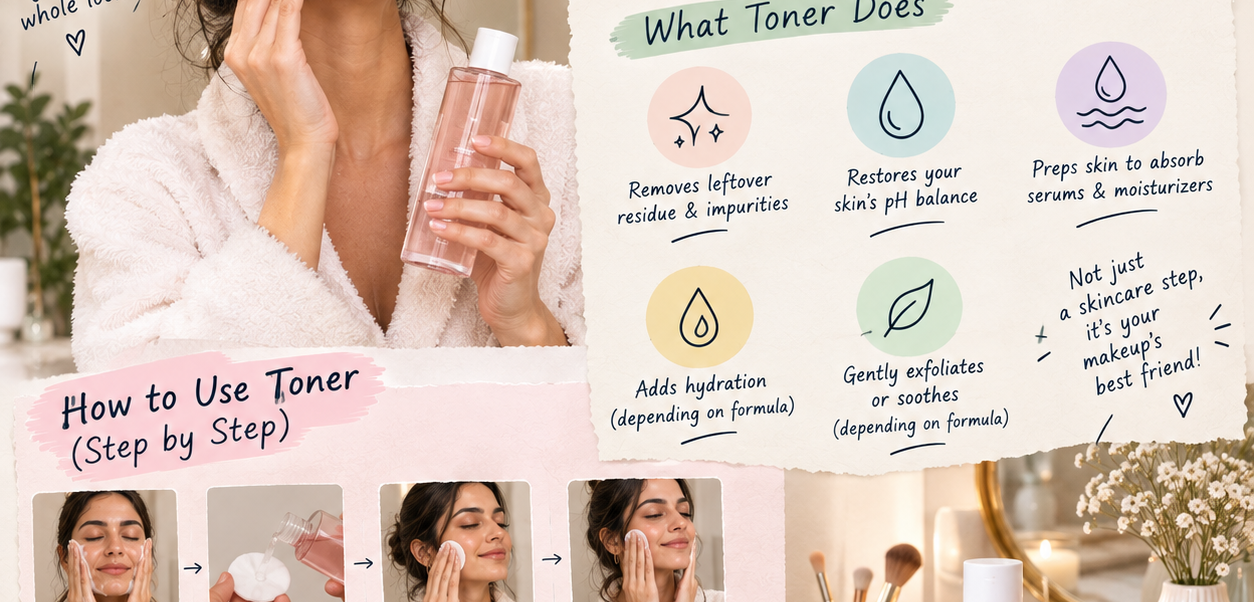
Removing leftover residue is one of the biggest jobs. Even a good cleanse can leave behind small traces of dirt, makeup, or oil, and toner sweeps that away so your skin is genuinely clean, not just rinsed.
Restoring your skin’s pH balance is another key function. Cleansing can temporarily push your skin toward a more alkaline state, and toner helps bring it back toward its naturally slightly acidic balance, which supports a healthier-looking barrier overall.
Prepping your skin to absorb what comes next matters more than people realize. Applying serum or moisturizer onto slightly damp, toned skin generally helps those products sink in more effectively than applying them onto dry skin straight out of the shower.
Depending on the formula, toner can also add a layer of hydration, gently exfoliate with ingredients like mild acids, or calm redness and irritation. The exact benefit depends heavily on what’s actually in the bottle, which is why picking the right type for your skin matters.
Toner and Makeup: Why This Step Matters Before You Get Dressed
Here’s the part that actually connects back to your closet. Skipping toner, or applying it inconsistently, tends to show up later in the exact way I learned about it, foundation clinging to dry, uneven patches instead of sitting smoothly.
Well-balanced, properly hydrated skin genuinely holds makeup better and longer. If you’re getting ready for a night out, dinner, or a big event, that prep step before you even touch a foundation brush is doing more work than most people give it credit for.
This is especially worth thinking about if you’re building a look around something structured or fitted, the kind of outfit where all eyes end up on your face and neckline. If you’re planning a going-out look around a great camisole, for example, skin that photographs smoothly is doing just as much work as the outfit itself.
This matters just as much whether that top is paired with your favorite bottom wear for a casual night out or something dressier for a bigger occasion.
Choosing a Toner Based on Skin Type
Not every toner works for every skin type, so here’s a quick reference before you buy one.
| Skin type | What to look for | What to avoid |
| Oily or acne-prone | Toners with salicylic acid or witch hazel | Heavy, oil-based formulas |
| Dry | Hydrating toners with glycerin or hyaluronic acid | Alcohol-based, stripping formulas |
| Sensitive | Alcohol-free, fragrance-free, soothing ingredients like chamomile | Exfoliating acids used too frequently |
| Combination | A balancing, lightweight formula | Overly heavy or overly stripping toners |
| Mature | Toners with antioxidants or gentle actives | Harsh astringents that emphasize dryness |
My honest advice: if you’re not sure where you land, start with a gentle, alcohol-free, hydrating formula. It’s the safest starting point for almost any skin type, and you can always add a more targeted, active-ingredient toner later once you know how your skin responds.
How to Actually Use Toner, Step by Step
The application itself is simple, but a few small details actually make a real difference.
Cleanse first, always. Toner works on clean skin, and applying it over leftover makeup or sunscreen defeats most of what it’s meant to do.
Apply with a cotton pad or your hands, using gentle, upward motions across your face and neck. Saturate the pad well, but avoid soaking it to the point of dripping.
Apply while your skin is still slightly damp, ideally within a minute or two of cleansing, for the best absorption. Follow immediately with your serum or moisturizer while your skin can still make the most of that hydration.
Most people can use a gentle, hydrating toner both morning and night. If you’re using an exfoliating or active toner, one to three times a week is usually plenty, so pay attention to your own skin’s tolerance rather than assuming daily use is always better.
Toner for Different Occasions
Just like you’d adjust an outfit for the occasion, it’s worth thinking about your skincare timeline the same way.
For everyday wear, a simple, consistent morning and night toner routine is all you need. This is really about long-term skin health rather than any single event, similar to how a solid capsule wardrobe is built around consistency rather than one-off pieces.
For date night or a dinner out, I like to add a hydrating toner an hour or so before I start makeup, giving my skin time to fully absorb it rather than layering foundation on top of skin that’s still slightly damp.
For a big event, like a wedding or holiday party where you know you’re wearing something more structured or dressed-up, start prepping your skin a day or two ahead rather than the same afternoon. Consistent hydration in the days leading up matters more than anything you do the morning of.
If you’re planning what to actually wear alongside that prep, my guide to Christmas party outfits is worth a look too.
It’s a similar mindset to browsing your options across types of clothing well before the actual event instead of scrambling the day of.
Common Toner Mistakes That Undo All That Prep
A few habits quietly cancel out the benefits of an otherwise good toner, so let’s fix them.
Using an alcohol-heavy, stripping toner is probably the most common one, especially among people who tried toner years ago and assumed all formulas still work that way. If your skin feels tight or uncomfortable right after applying, that’s usually a sign the formula is too harsh for your skin.
Overusing exfoliating or active toners is another mistake I’ve made myself. More frequent use doesn’t mean faster results, it usually just means more irritation, especially if you’re also using other active ingredients elsewhere in your routine.
Applying toner and then waiting too long before your next step lets much of that hydration evaporate before it can do its job. Move through your routine relatively quickly once your skin is toned.
Skipping toner entirely because it feels like an extra step is honestly the biggest missed opportunity. It’s a genuinely quick addition, usually under a minute, for a noticeably better base for whatever you’re putting on top, makeup included.
Building Toner Into a Getting-Ready Routine With Your Outfit
If you’re someone who plans your outfit and beauty routine together for a big night, here’s how I’d actually sequence it. Cleanse and tone first thing when you start getting ready, then let your skincare fully absorb while you handle other prep, picking accessories or deciding on shoes.
That’s also a good window to settle on whichever top you’re actually committing to for the night, since trying on outfits while your skincare is still absorbing keeps you from rushing either step.
The same goes if you’re leaning toward a dress instead, settle on it early enough that you’re not doing a last-minute outfit change with half your makeup already on.
By the time you’re ready for makeup, your skin has had real time to absorb everything instead of fighting against a still-damp product. It’s a small sequencing change that makes a genuinely noticeable difference in how your finished look photographs and holds up through a long night out.
FAQs
1. What is toner actually used for?
Toner removes leftover residue after cleansing, helps restore your skin’s natural pH balance, and preps your skin to better absorb whatever product you apply next, like serum or moisturizer.
2. Is toner necessary, or is it an optional skincare step?
It’s generally considered optional but genuinely beneficial. Most skin types see real improvement from consistent toner use, particularly in how well makeup applies and wears throughout the day.
3. Can toner help my makeup last longer?
Yes, well-hydrated, balanced skin generally holds makeup more evenly and for longer than skin that’s dry, uneven, or still carrying leftover cleanser residue.
4. How often should I use toner?
A gentle, hydrating toner can typically be used both morning and night. Exfoliating or active toners are usually better limited to one to three times a week, depending on your skin’s tolerance.
5. What’s the difference between old toners and newer formulas?
Older toners were often alcohol-based and drying. Most modern toners are water-based and built around hydrating or soothing ingredients, making them suitable for daily use on most skin types.
6. Should I use toner before a big event like a wedding or holiday party?
Yes, and ideally start a day or two ahead rather than just the morning of. Consistent hydration in the lead-up matters more than a single application right before you start your makeup.
7. Can toner replace moisturizer?
No, toner and moisturizer serve different purposes. Toner preps and lightly hydrates the skin, while moisturizer seals in that hydration and provides longer-lasting moisture on top.
The Bottom Line
So there you have it, ladies, the real uses of toner come down to prepping, balancing, and helping everything else in your routine actually work better, makeup included. It’s a small step that quietly supports the bigger picture, whether that’s your everyday skin health or how put-together you look walking into a big event.
My honest advice is to treat toner as part of your getting-ready routine the same way you’d treat picking the right undershirt or slip, it’s not the star of the outfit, but it’s doing real work behind the scenes to make everything else look better.
Do you already use toner, or is this convincing you to finally add it in? Let me know in the comments, I’d love to hear what’s working for your routine.
Happy styling, ladies!