Table of Contents
Hey lovely ladies! Most winter fashion trends roundups tell you what’s in style this season, and I’ve written plenty of those myself. But none of them tell you the thing that actually matters once temperatures drop: how to layer all those trendy pieces without looking like you’re wearing a sleeping bag to brunch.
I learned this one the hard way during my first real winter living somewhere cold. I piled on every thick sweater and jacket I owned, all at once, and ended up looking like one giant rectangle while somehow still being sweaty by 10am. Turns out, staying warm and looking put-together isn’t about how many layers you add, it’s about which layers you’re actually adding, and in what order.
This guide is less about chasing a specific winter fashion trend and more about the actual technique behind dressing well in the cold. Once you understand the system, you can build any trend into it, whether that’s this year’s color story or a classic piece you’ve worn for years. Let’s get into it.
The Three-Layer System Every Winter Fashion Trends Need
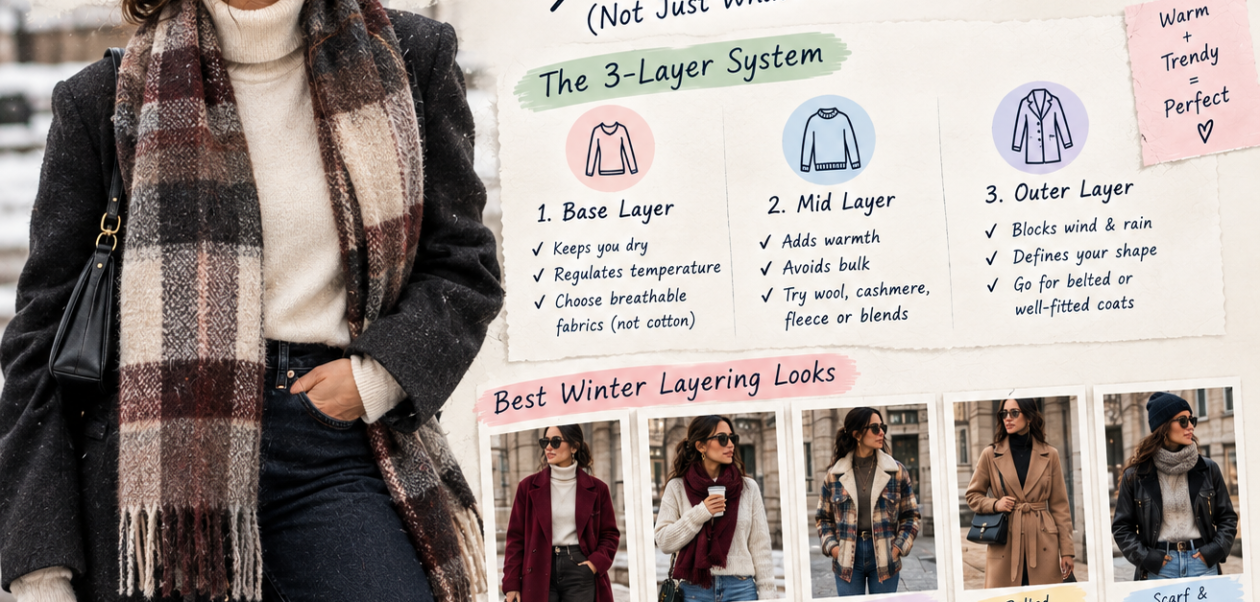
Good winter dressing comes down to three distinct layers, each with its own job. Understanding what each one is actually supposed to do is the difference between looking intentional and looking like you just grabbed everything warm in your closet at once.
Your base layer sits against your skin and regulates temperature. Your mid layer provides the actual insulation. Your outer layer protects you from wind, rain, and snow. When each layer does its specific job well, you end up needing far less bulk overall than piling on random thick pieces.
Most people make the mistake of skipping straight to thick, heavy pieces for every layer. A chunky sweater under a heavy coat creates unnecessary volume, and once every layer is thick, you lose your actual shape entirely.
Base Layer: What Actually Works (and Why Cotton Isn’t It)
Your base layer should be thin, close-fitting, and breathable, not because thinner means less warm, but because a good base layer’s job is moisture regulation, not bulk.
Cotton is genuinely a poor choice here, even though it’s a fabric I love for plenty of other things. It absorbs sweat and stays damp against your skin, which actually makes you feel colder over the course of the day rather than warmer. If you want to understand more about how cotton behaves compared to other fabrics, my denim vs cotton breakdown covers a lot of that same logic, just applied to a different use case.
Merino wool, modal, and synthetic thermal fabrics are your best bet instead. They trap warmth close to your body while staying breathable, which means you can layer more on top without overheating halfway through the day.
Mid Layer: Building Warmth Without the Bulk
This is where most winter outfits go wrong. The instinct is to reach for the thickest sweater in your closet, but a better approach is layering two thinner pieces instead of one thick one.
A fine-gauge sweater over a fitted turtleneck, or a cardigan layered over a lightweight knit, gives you real warmth while keeping your silhouette controlled. Fabric weight genuinely matters here, and it’s the same GSM logic I’ve talked about before, a heavier single layer isn’t always warmer than two well-chosen lighter ones, and it’s almost always bulkier.
Fleece, cashmere, and wool blends all punch above their weight for warmth relative to how much bulk they actually add, which is exactly why they show up so often in good mid-layer pieces. If you’re shopping for new mid-layer pieces this season, feel the fabric before you buy. A lightweight cashmere sweater will almost always keep you warmer than a much bulkier acrylic knit, even though the acrylic looks thicker on the hanger.
Outer Layer: Choosing a Coat That Works With Your Body
Your outer layer’s job is protection from the elements, and it’s also the piece doing the most visual work in your whole outfit. A few small choices here make a big difference in how the finished look reads.
A belted coat is genuinely one of my favorite winter styling tricks. Cinching the waist, even over multiple layers underneath, defines your shape instead of letting the whole outfit read as one shapeless block.
Coat length matters more than people expect too. A coat that hits mid-thigh or shorter tends to read more proportional on a shorter frame than a longer style, though a longer coat can look genuinely elegant if the rest of your outfit stays slim underneath it. This is exactly the kind of proportion thinking that applies to any layering piece in your closet, not just outerwear specifically.
Layering Denim and Bottoms for Cold Weather
Your bottom half needs the same layering logic as your top half, and this is a step people skip constantly. Thin, seamless tights worn underneath jeans or trousers add real warmth without adding visible bulk, and they work especially well under straight-leg or wide-leg styles.
If you’re buying new denim specifically for colder weather, it’s worth thinking about wash and weight together. Heavier, deeper-wash denim tends to feel warmer against the skin than a lighter, thinner wash, and pairing it with the right base layer underneath makes a noticeable difference on genuinely cold days.
Keeping at least one part of your outfit fitted, whether that’s a tucked-in base layer or slim-through-the-leg pants, is what stops a heavily layered winter outfit from reading as one big shapeless mass, especially important if you’re working with bottom wear on the relaxed or wide-leg side.
Proportion Tricks: How to Layer Without Looking Like a Marshmallow
A few common mistakes are responsible for most bulky-looking winter outfits, and thankfully, all of them have easy fixes.
| The Mistake | The Fix |
| Thick sweater under a heavy coat | Thin base layer, one mid layer, structured coat |
| All oversized layers, no shape | Keep at least one layer fitted or tucked |
| Skipping a belt or waist definition | Belt your coat or cardigan to define your shape |
| Bulky tights under skinny jeans | Save thin tights for straight or wide-leg pants |
| Piling on too many thick pieces | Two thin layers instead of one thick one |
| Ignoring accessories | Slim scarves and gloves reduce how many clothing layers you actually need |
My honest take: accessories are genuinely underrated here. A good scarf, hat, and gloves can replace an entire extra clothing layer, which means your actual outfit underneath your coat can stay slimmer and more intentional.
Winter Layering for Different Occasions
The right layering approach shifts depending on where you’re actually headed, so let’s get specific.
For the office, a merino base layer under a tailored sweater, topped with a structured, belted coat, reads polished and professional without sacrificing warmth. Save the bulkiest pieces for the weekend.
For a holiday party or dressier winter event, lean into fewer, more elevated layers rather than piling on casual pieces. A fitted base layer under a nice dress, with a tailored coat over the top, works beautifully, and my Christmas party outfit guide has more specific ideas if you’re still deciding what to wear underneath all that layering.
For winter travel or a full day outdoors, this is genuinely the one scenario where a few extra layers make sense. A moisture-wicking base, a warm mid layer, and a proper insulated outer layer will serve you far better than one heavy coat over a thin outfit.
For casual weekend errands, a simple, fitted top under a cozy cardigan and a structured coat gets you warm coverage without the effort of a full styled-out look. This is honestly my go-to when I want to look put-together without thinking too hard about it.
Common Winter Layering Mistakes
A few habits trip people up constantly once the weather turns cold, so let’s fix them before the season really sets in.
Choosing warmth over fit at every single layer is probably the biggest one. Oversized everything might feel cozy, but it swallows your shape entirely. Balance at least one layer fitted against the rest for structure.
Forgetting that layers need to be removable is another common oversight. Indoor spaces are usually heated, so an outfit that only works fully bundled up leaves you stuck and overheated the moment you step inside somewhere warm.
Building a whole winter wardrobe around one type of piece, usually just heavy sweaters, is a mistake too. A well-rounded capsule wardrobe for winter needs pieces at every layer level, thin base pieces, versatile mid layers, and a couple of solid outer layers, not just an endless rotation of sweaters.
Ignoring texture mixing is a missed opportunity as well. A smooth base layer under a textured knit, finished with a sleek coat, reads far more intentionally than three pieces in the exact same texture and weight stacked on top of each other. If you want to see how texture mixing is actually showing up on runways this season, I covered that in more depth in my fashion trends 2026 roundup.
FAQs
1. What’s the best base layer fabric for winter?
Merino wool, modal, and synthetic thermal fabrics are the best choices, since they regulate temperature and stay dry against your skin. Cotton tends to absorb moisture and actually makes you feel colder over time.
2. How many layers should I actually wear in winter?
Three purposeful layers, a base, a mid layer, and an outer layer, is usually enough. More layers doesn’t necessarily mean warmer, it often just means bulkier and harder to move in.
3. How do I stay warm without looking bulky?
Choose thin, high-quality fabrics at each layer instead of one thick piece, keep at least one part of your outfit fitted, and use a belt to define your waist over multiple layers.
4. Can I wear tights under jeans for extra warmth?
Yes, thin, seamless tights work well under straight-leg or wide-leg jeans and trousers, adding real warmth without much visible bulk. They’re trickier to pull off under skinny styles.
5. What coat length is most flattering?
It depends on your height and the rest of your outfit, but a coat hitting mid-thigh or shorter tends to read proportional on shorter frames, while longer coats work well paired with slimmer layers underneath.
6. Do accessories actually help with layering?
Genuinely, yes. A good scarf, hat, and gloves add real warmth and let you skip an entire extra clothing layer, keeping your actual outfit underneath your coat slimmer.
7. What’s the biggest mistake people make with winter layering?
Choosing warmth over fit at every layer, which results in an outfit that reads as one shapeless block. Balancing at least one fitted layer against the rest solves this almost every time.
The Bottom Line
So there you have it, ladies, the real secret behind good winter fashion isn’t just knowing which trends are in season, it’s understanding how to layer them properly. A thoughtful base, a smart mid layer, and a well-chosen outer layer will always look better and function better than piling on whatever’s thickest.
My honest advice is to actually build your winter wardrobe around this three-layer system rather than buying pieces at random. Once you understand what each layer is supposed to do, dressing for the cold stops being a struggle and starts being one of the more creative parts of getting dressed. It also means you get more mileage out of pieces you already own, since a good base or mid layer works under almost anything you pair it with.
What’s your biggest winter layering struggle? Tell me in the comments, I promise you’re not the only one who’s accidentally dressed like a marshmallow at some point.
Happy styling, ladies!